

Top Wealthy Traders: Their Stories and Strategies
Discover profiles of the world's richest traders 🌍, their unique strategies 📈, milestones 🏆, and lessons for aspiring investors in India 🇮🇳 and beyond.
Edited By
Charlotte Evans
Amazon's profits reflect a complex balance between its diverse revenue sources and extensive cost structures. Traders and investors closely watch these dynamics to gauge the company's financial health and growth prospects.
At its core, Amazon earns from three main streams: online product sales, Amazon Web Services (AWS), and subscription services like Prime. Each segment contributes differently to the bottom line. For example, while the retail division drives massive sales volume, it operates with narrower margins due to intense competition and logistics costs. AWS, being a cloud computing platform, offers higher profit margins and is a key profit engine for the company.

Cost management plays a vital role in maintaining profitability. Expenses related to fulfilment centres, last-mile delivery, and technology infrastructure eat into revenues. Amazon invests heavily in automation and AI to reduce fulfilment costs, especially in large markets like the US, Europe, and India.
Understanding cost structures alongside revenue is essential to see why Amazon’s net profits may fluctuate despite growing topline figures.
Investment strategy also directly impacts profits. Amazon regularly reinvests earnings into logistics expansion, content creation for Prime Video, and technology upgrades. These investments affect short-term profits but aim to secure long-term growth and market dominance.
For instance, in FY 2023-24, AWS accounted for nearly 60% of Amazon’s operating income even though it contributed under 20% of total revenue, highlighting how vital this segment is to overall profitability.
Key indicators for analysts include gross margin trends, operating expenses as a percentage of sales, and segment-wise profit margins. Monitoring these helps assess which business areas are gaining traction or facing pressure.
To sum up, Amazon’s profits emerge from a careful blend of revenue diversification, disciplined cost control, and forward-looking investments. For those analysing Amazon’s financial journey, recognising the interplay between these factors offers clearer insights into both current performance and future outlook.
Understanding Amazon's profit performance offers crucial insights into how this behemoth sustains its position among global market leaders. Investors and analysts often start here because profit figures reflect not only the company's operational efficiency but also its response to external market forces and strategic decisions. For instance, actual quarterly profits highlight Amazon's ability to balance hefty investments in logistics and technology against revenue growth.
Quarterly and annual profit figures reveal Amazon’s financial health in near real-time and over extended periods. Analysts closely watch these figures to assess whether Amazon meets market expectations and how fluctuations affect investor confidence. For example, a sudden dip in quarterly profits might signal rising costs or slowing sales, prompting traders to adjust their positions. Conversely, steady yearly profit growth reassures stakeholders about company stability and potential dividend increases.
Impact of market trends on profitability plays a significant role in shaping Amazon’s earnings. Seasonal shifts like festive sales in India or global events like supply chain bottlenecks directly influence profit margins. Market trends, including increased online shopping due to digital adoption, have boosted Amazon’s retail revenue but also raised fulfilment expenses. Thus, understanding how these external factors affect profits helps investors anticipate future performance.
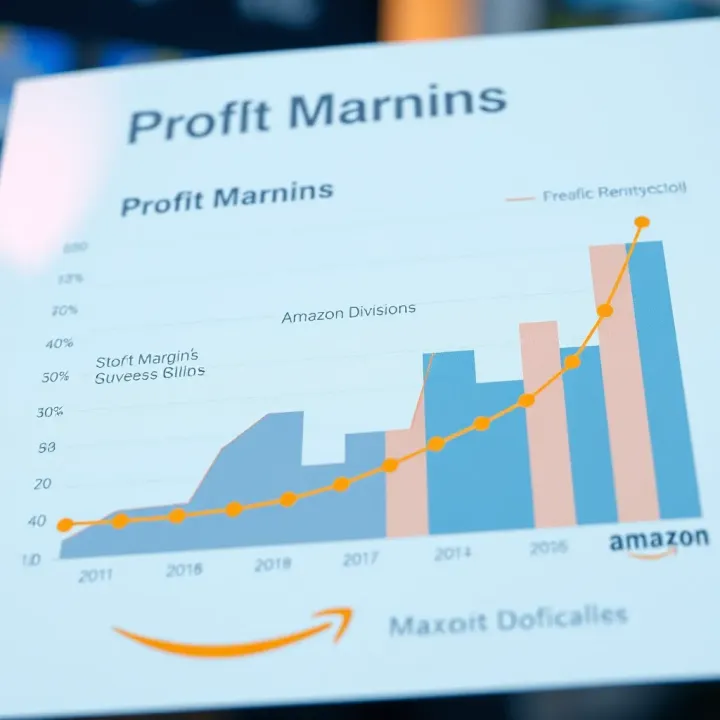
Profit trends over the past decade demonstrate Amazon’s transformation from a pure online retailer to a diversified technology powerhouse. A decade ago, thin profit margins marked its retail operations, but rapid growth in Amazon Web Services (AWS) and advertising have significantly lifted overall profitability. Tracking this trend clarifies how different business lines contribute unevenly but collectively sustain long-term profit growth.
Key milestones in earnings growth pinpoint turning points in Amazon’s journey. For instance, the launch of AWS in the mid-2000s eventually became a major profit driver, eclipsing the core e-commerce business. Another milestone includes the rise of subscription services like Amazon Prime, which not only stabilise revenue but improve customer retention. Recognising these milestones helps readers understand the strategic shifts that improved Amazon’s bottom line.
Regularly reviewing Amazon’s profit overview equips traders and analysts to make informed decisions, considering both internal developments and external market influences.
This section sets the stage for deeper analysis into revenue streams, costs, and challenges affecting Amazon’s profits.
Amazon’s profits mainly flow from three core areas: e-commerce and retail sales, Amazon Web Services (AWS), and advertising plus other services. Each area carries significant weight, but they contribute differently to revenue, profit margins, and future growth prospects.
Contribution to overall revenue
E-commerce remains the backbone of Amazon’s business. In financial terms, retail sales, including products sold through Amazon’s online platform and third-party sellers, generate the largest chunk of revenue. For instance, in FY 2023, this segment accounted for over 55% of overall revenue. The scale of operations—from electronics and apparel to groceries like Amazon Pantry in India—ensures a steady money flow. This segment’s size helps Amazon capture vast consumer demand in multiple geographies, including fast-growing markets like India.
Profit margins on product sales
However, product sales tend to have thinner profit margins compared to other segments. Competitive pricing and high logistics costs, particularly for deliveries across remote regions in India, squeeze margins. Typically, retail profit margins hover around 5–7%, but efficient supply chain improvements and bulk-buying power help retain profitability. Also, Amazon’s efforts in managing inventory and reducing return rates have slightly lifted margins, making retail sales profitable despite being volume-driven.
Role of AWS in profitability
AWS plays a critical role in Amazon’s profit growth. While e-commerce drives revenue, AWS generates a disproportionately higher share of operating profit. AWS offers cloud computing infrastructure to enterprises and governments, serving as the backbone for many Indian startups and established firms. The segment’s high margins—reported at around 30%—stem from relatively lower operational costs and strong pricing power.
Growth and market share of cloud services
AWS holds roughly 33% of the global cloud market, competing closely with Microsoft Azure and Google Cloud. Its strong growth momentum, particularly in Asia-Pacific and India where digital transformation is gathering pace, fuels Amazon’s overall profitability. For example, adoption by Indian IT firms and digital enterprises has expanded AWS’s client base, underlining how cloud services serve as a long-term profit engine that grows with new use cases and scale.
Advertising revenue growth
Amazon’s advertising business has been picking up rapidly, contributing a growing share to overall profits. By selling ad space on its platform, Amazon effectively monetises its massive user base. This segment offers attractive margins, often exceeding 40%, since advertising requires comparatively low incremental costs. This setup helps Amazon diversify profits beyond product sales and cloud services.
Subscription services and their impact
Subscription offerings such as Amazon Prime India have also boosted revenue and profit. These services lock in customers through benefits like free delivery, exclusive deals, and video content. The recurring nature of subscriptions not only stabilises income but also increases customer lifetime value. Plus, Prime membership growth in tier-2 and tier-3 cities fuels steady revenue streams, particularly as internet penetration improves nationwide.
In summary, Amazon’s profits stem from a mix of high-volume retail sales, high-margin cloud services via AWS, and rapidly expanding advertising and subscription revenues. This diversified revenue model helps it sustain growth amid challenging market conditions.
Understanding Amazon's cost structure is key to grasping how the company maintains its profitability despite intense competition and market fluctuations. Costs in areas like logistics, technology, and administration directly influence profit margins, often shaping strategic decisions around expansion and investment.
Amazon invests heavily in delivery infrastructure to ensure fast and reliable customer service, which is vital in markets like India where consumer expectations for quick delivery are rising. Establishing fulfilment centres, sortation hubs, and last-mile delivery networks requires significant capital. For example, Amazon's fulfilment centres across major Indian cities enable same-day and next-day deliveries, helping retain customer loyalty but at a considerable operational cost.
These investments increase operating costs but improve efficiency in the long run. High spending on logistics initially compresses margins because of expenses related to warehousing, transportation, and labour. However, optimising delivery routes and automation helps reduce costs over time. Amazon’s ability to balance these expenses impacts its overall profit margins, especially as it expands into tier-2 and tier-3 cities where delivery challenges and costs spike.
Technology forms the backbone of Amazon’s AWS cloud services, ecommerce platforms, and data analytics. Significant expenditure goes into servers, data centres, and networking hardware. For instance, AWS’s investment in Indian data centres not only supports local demand but also complies with government data localisation policies. These costs are essential for ensuring service uptime, speed, and security but represent a substantial chunk of operational expenses.
Amazon also spends on original content for Prime Video and other subscription services. Producing regional-language films and shows, especially to cater to diverse Indian audiences, increases content costs. While this strategy drives subscription growth and customer engagement, it adds to overheads that must be carefully managed relative to subscription revenues.
Attracting and retaining customers is costly, especially in price-sensitive markets like India. Amazon invests heavily in marketing campaigns, discounts, and promotional offers during festive sales and other events. These expenses drive high customer volumes but can squeeze profits momentarily if acquisition costs rise faster than lifetime customer values.
Beyond direct selling and marketing, Amazon incurs costs through administrative activities like compliance, HR, legal, and finance functions. These overheads, while less visible, are necessary to support vast operations spread over multiple regions. Efficient management of these costs can boost net profits by preventing ballooning internal expenses.
Amazon’s profit margins depend heavily on how it manages these costs. Investing wisely in logistics and technology while controlling marketing and administrative expenses enables Amazon to strike a balance between growth and profitability.
In sum, a deep understanding of Amazon’s cost structure allows investors and analysts to predict how future spending could affect earnings and where efficiency improvements might emerge.
Amazon faces several hurdles that directly affect its profit margins and growth potential. Understanding these challenges helps investors and analysts gauge the risks alongside the company’s strong performance. These issues often demand significant strategy shifts and resource allocation, impacting the bottom line.
Amazon encounters fierce competition worldwide, particularly in India where platforms like Flipkart, Reliance’s JioMart, and Tata’s e-commerce ventures have gained momentum. These local players often compete aggressively on pricing, logistics efficiency, and regional consumer behaviour understanding. In India alone, tight margins in e-commerce and the need for heavy investment in delivery infrastructure put pressure on Amazon’s profits.
Globally, Amazon also battles giants like Alibaba and Walmart-owned platforms, each pushing unique growth strategies. This saturation means Amazon must invest continuously to retain market share and keep customers loyal, resulting in higher operating costs.
In its cloud computing division, Amazon Web Services (AWS) faces rivalry from Microsoft Azure and Google Cloud. While AWS leads the market, Microsoft and Google are rapidly expanding, often undercutting prices and offering integrated enterprise solutions.
This competition drives Amazon to invest heavily in enhancing AWS capabilities and expanding regions to maintain an edge. Such efforts influence operating costs but are essential to defend its cloud revenue, a key profit contributor.
Operating in diverse countries subjects Amazon to varied compliance requirements, including data privacy, consumer protection, and labour laws. For example, India's IT rules on content regulation and data localisation impose compliance costs.
These regulations often require Amazon to tailor its platform or invest in legal and administrative resources, adding to expenses that reduce net profitability.
Tax regimes vary significantly across Amazon’s markets, with higher corporate taxes or digital levies reducing net income. India’s recent equalisation levy on digital advertising affects Amazon’s advertising revenues.
Additionally, transfer pricing rules and customs duties in key markets sometimes lead to unexpected tax liabilities, forcing Amazon to reassess its structure and impacting cash flows.
Supply chain disruptions caused by geopolitical uncertainties, pandemic aftereffects, and container shortages have increased Amazon’s delivery times and costs. For instance, monsoon season in India often worsens last-mile delivery efficiency.
These delays and cost escalations affect customer satisfaction and operational expenses, curbing profit growth.
To counter these disruptions, Amazon invests in warehousing closer to demand centres and partners with local logistics firms. It also diversifies supplier bases to reduce dependency on single sources.
This strategy boosts resilience but requires upfront capital and ongoing management costs, influencing short-term earnings but improving long-term stability.
Addressing these challenges is essential for Amazon as they shape how profits evolve. Continuous adaptation in competition, regulation, and supply chains will decide how strongly Amazon sustains its financial performance amid global uncertainties.
Evaluating Amazon’s future outlook is vital for investors and analysts who want to understand where the company is heading in terms of sustained profitability. This section focuses on aspects such as market expansion, technology advances, and investment strategies that will shape earnings growth. Knowing these elements helps gauge whether Amazon can keep up its profit momentum amid mounting competition and changing market dynamics.
Expansion into new markets like India: India represents one of the largest untapped e-commerce and cloud service markets globally. Amazon’s increasing investment in Indian infrastructure, including warehouses and fulfilment centres, aims to deepen its penetration beyond major metros into tier-2 and tier-3 cities. This expansion is practical for tapping into the growing internet user base and rising smartphone adoption, especially considering government's push for digital inclusion. With competition from local players like Flipkart and Reliance Digital, Amazon’s success hinges on localisation strategies, competitive pricing, and faster delivery.
Increasing AWS penetration: Amazon Web Services (AWS) remains a major profit driver, with scope for further growth both in India and globally. Many Indian startups, SMEs, and enterprises are migrating to cloud platforms to improve efficiency and scalability. AWS provides a range of services from computing power to AI tools, which businesses increasingly rely on. AWS’s ongoing investment in data centres and customised solutions for sectors such as fintech and healthcare in India highlight its focus on capturing market share amid competition from Microsoft Azure and Google Cloud.
Use of AI and automation to optimise costs: Amazon actively employs artificial intelligence and automation across its supply chain and cloud operations. In logistics, AI helps forecast demand, optimise delivery routes, and automate warehouses, reducing reliance on manual labour and cutting operational costs. In AWS, AI-driven services enable businesses to automate tasks, improving efficiency and lowering expenses. This tech adoption not only improves profit margins but also boosts Amazon’s ability to scale rapidly amid rising volumes.
New product and service offerings: To sustain growth, Amazon consistently introduces new products and services. For example, its launch of Amazon Pharmacy addresses an emerging healthcare segment in India, while Alexa-enabled devices push smart home adoption. Services like Amazon Prime Video and music subscriptions add recurring revenue streams, balancing the lower margins in retail. These innovations respond to evolving consumer preferences, helping Amazon diversify revenues and improve overall profitability.
Capital expenditure priorities: Capital investments focus on building logistics infrastructure, data centres, and developing proprietary technology. Amazon’s sizeable spending on expanding warehousing facilities in India itself underlines its commitment to fast deliveries, a strong competitive edge. In cloud services, funding new availability zones ensures better service reliability and attracts enterprise clients. Prioritising capex in areas that accelerate customer acquisition and retainment helps support long-term profit growth.
Balancing growth and profitability targets: Amazon faces the challenge of managing aggressive expansion while sustaining profits. It strategically modulates spending and pricing to ensure profitable growth rather than just chasing market share. For instance, selective investment in high-growth markets like India is balanced with optimising cost structures in mature markets. Likewise, AWS focuses on premium enterprise clients to boost margins. This balance is critical for maintaining investor confidence and consistent earnings.
Amazon’s future profit growth depends on smart market expansion, technological edge, and disciplined investments that deliver both revenue and cost benefits. This outlook provides vital insights for stakeholders aiming to assess Amazon’s long-term value proposition.
Discover profiles of the world's richest traders 🌍, their unique strategies 📈, milestones 🏆, and lessons for aspiring investors in India 🇮🇳 and beyond.

📈 Explore Ripple XRP's latest price trends, expert insights, and key market moves to watch. Stay informed on regulation impacts and future outlooks.

📱 Explore real trade apps in India: features, benefits, security tips, and how to start trading stocks, currencies & commodities confidently.

Explore profiles of India's top forex traders 💹, learn their strategies, career paths, challenges, and tips for building wealth in the Indian forex market 🇮🇳.
Based on 9 reviews