

Key Competitors of The Coca-Cola Company in India and Globally
Discover Coca-Cola's key competitors in India and globally 🍹. Learn how rival brands tackle market challenges in soft drinks, water, juices, and new trends.
Edited By
Isabella Foster
Boeing stands as a giant in the global aerospace industry, but it faces stiff rivalry from several key players. Understanding these competitors is essential for traders, investors, and analysts who want to gauge market dynamics and investment potential within this sector.

Airbus is the most prominent competitor to Boeing in the commercial aircraft segment. With its extensive A320neo and A350 families, Airbus has challenged Boeing’s dominance, especially after issues with Boeing’s 737 MAX. The consistent delivery of fuel-efficient, technologically advanced planes has allowed Airbus to seize significant market share worldwide.
China’s COMAC (Commercial Aircraft Corporation of China) represents an emerging competitor, focusing on the domestic and regional jet market with its C919 model. While still growing in global reach, COMAC benefits from government backing and aims to reduce China’s reliance on foreign aircraft.
Russian manufacturer Irkut, with its MC-21 aircraft, also seeks to carve a niche, particularly in regional and narrow-body segments. Though production has faced delays, modest orders from Russian and neighbouring markets keep it in the competition.
In defence aerospace, Boeing competes with Lockheed Martin and Northrop Grumman from the United States. Lockheed Martin’s F-35 Lightning II and other military platforms challenge Boeing’s fighter jets and military transport offerings. Northrop Grumman, known for its stealth bombers and unmanned systems, presses with cutting-edge technology.
European firms like BAE Systems and Dassault Aviation also impact the market with combat aircraft catering to NATO and other defence alliances. These companies often collaborate with multinational consortia, affecting Boeing’s international defence contracts.
Competitors often leverage government partnerships and subsidies, especially in Europe and Asia, to strengthen their positions. Technological innovation in materials, avionics, and alternative fuels influences competitive advantage.
For investors and analysts, recognising not just the market share but the technology trajectories and geopolitical influences surrounding these competitors provides clearer insights into Boeing’s future challenges and opportunities.
Airbus: Leading global commercial aviation rival with a wide product range
COMAC: China-backed domestic and regional aircraft maker
Irkut: Russian regional jet producer with geopolitical support
Lockheed Martin & Northrop Grumman: US defence aerospace giants
BAE Systems & Dassault Aviation: European defence aerospace players
This overview sets the stage to analyse how Boeing navigates these competitors amid evolving market demands, geopolitical shifts, and rapid technological change.
Understanding the global aerospace market is vital for grasping the competitive dynamics that Boeing faces today. This market encompasses various sectors, each with distinct demand drivers, technological requirements, and key players. For investors and analysts, appreciating these segments helps to evaluate company strategies and forecasts accurately.
Commercial aircraft form the backbone of the aerospace industry, driven primarily by global air travel demand. This segment includes narrow-body jets, wide-body planes, and regional aircraft used by airlines for passenger and cargo transport. The continual growth in middle-class population, especially in countries like India and China, spurs demand for air travel, directly influencing orders for commercial aircraft. For example, the rise of low-cost carriers in India has greatly increased demand for efficient, cost-effective planes like the Airbus A320 and Boeing 737 series.
Defence and military aircraft represent a separate yet sizeable part of the aerospace industry. This sector is heavily influenced by government budgets, geopolitical tensions, and technological upgrades. Fighter jets, transport aircraft, and reconnaissance planes are key products here. Defence contracts tend to be long-term and high-value, making them crucial for manufacturers like Lockheed Martin and Dassault Aviation. India’s recent defence procurements, including the Rafale jets, showcase how military demand impacts production and market competition.
Space and satellite technology is an increasingly critical area within aerospace, covering satellite manufacturing, launch vehicles, and associated ground systems. Demand comes from communication, earth observation, and navigation services. With India’s growing presence in space, marked by ISRO’s missions and private sector involvement, this segment is expanding rapidly. Companies involved in satellite technology and launch services could gain a competitive edge as space applications become integral to both commercial and defence sectors.
The aerospace market is dominated by a handful of large manufacturers with global reach. Airbus and Boeing lead the commercial segment, while firms like Lockheed Martin, Northrop Grumman, and BAE Systems dominate defence aviation. Emerging players such as COMAC from China and Embraer from Brazil are picking up market share by addressing regional and niche demands.
Market share distribution often reflects geopolitical and economic trends, affecting supply chains and customer bases. For instance, Boeing and Airbus together command over 90% of the large commercial aircraft market. However, trade tensions and regulatory changes can shift this balance. In defence, Russian and European manufacturers like Sukhoi and Eurofighter compete in specific markets, sometimes supported by government policies.
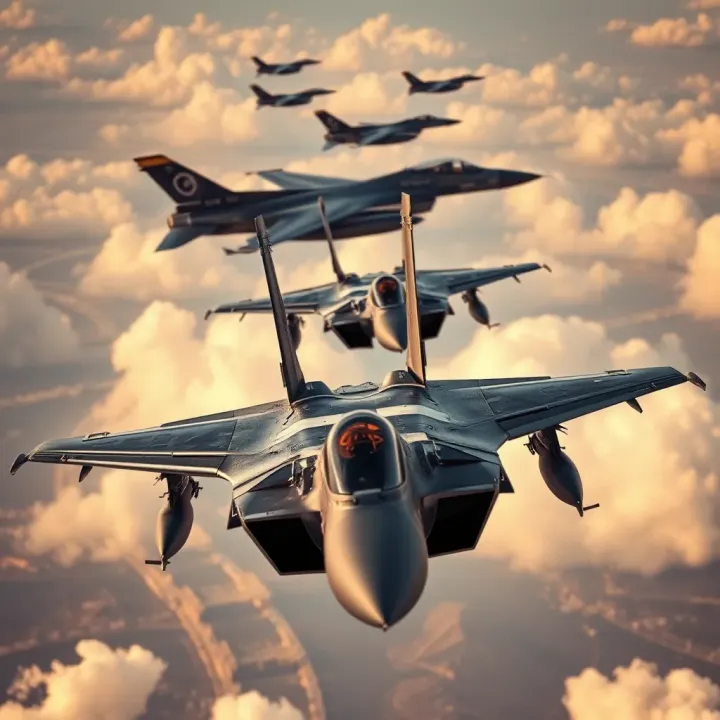
Tracking these shares provides insights into industry health and investment opportunities. For example, rising sales of narrow-body aircraft usually signal airline expansion, which benefits manufacturers and related suppliers. Similarly, shifts in defence spending can sway the fortunes of military aircraft makers.
Understanding these segments and players lays a strong foundation for analysing Boeing’s position against its rivals, shaping investment or advisory decisions in today's aerospace industry landscape.
Boeing faces stiff competition in commercial aviation, a sector that drives much of the aerospace industry's revenue. Understanding its primary rivals helps investors and analysts gauge Boeing's market position, innovation pace, and future risks. This focus is especially relevant today, as shifts in technology, regulation, and global demand redefine the playing field.
Product range and innovations
Airbus offers one of the broadest product portfolios in commercial aircraft, from single-aisle models like the A320 family to wide-body giants such as the A350 and A380. This range gives the company flexibility to serve various airline needs, from budget carriers to long-haul international flights. Their latest A321XLR boasts an extended range, making it a direct competitor to Boeing's 737 MAX, and helping airlines open new routes without needing larger aircraft.
Technologically, Airbus has pioneered the extensive use of composite materials, reducing aircraft weight and improving fuel efficiency. The fly-by-wire system, where pilots control aircraft electronically rather than mechanically, was mainstreamed by Airbus and now sets industry standards for safety and handling. For market participants, these innovations signal Airbus’s commitment to sustainability and efficiency, influencing airline procurement decisions.
Market strategies and key contracts
Airbus adopts a global strategy that involves partnerships and local production facilities, including in China and the US, boosting its geopolitical reach. Their focus on customised solutions for emerging markets like India has led to major orders from budget airlines and state carriers alike.
Large contracts, including deals with Emirates for the A380 superjumbo, underline Airbus's ability to secure flagship airline partnerships. These contracts impact Boeing's sales pipeline directly, especially in regions where Airbus maintains government-backed support. Staying aware of Airbus’s contract wins provides key hints about regional demand shifts and emerging routes.
COMAC of China
The Commercial Aircraft Corporation of China (COMAC) aims to challenge Boeing and Airbus’s duopoly, especially in the rapidly expanding Chinese aviation market. Its flagship models, like the C919 narrow-body jet, target domestic airlines that prefer homegrown technology amid rising geopolitical tensions. COMAC’s progress is gradual but steady, with certifications and commercial deliveries improving year by year.
For investors, COMAC represents a long-term competitive threat, particularly as China pushes for self-reliance in strategic industries. Indian airlines and leasing firms watching Asian market dynamics should note COMAC’s evolving capabilities and potential pricing advantages.
Embraer from Brazil
Brazil’s Embraer specialises in regional jets (typically seating under 150 passengers), an area Boeing does not dominate. Their E-Jet series is popular for short-haul flights, offering efficient operations for regional carriers. Embraer’s niche expertise complements Boeing’s portfolio but can also pull market share in segments Boeing targets for expansion.
Its innovative approach to cockpit commonality and fuel efficiency offers operators cost savings, driving sustained demand globally, including in India where regional connectivity schemes fuel passenger growth. Monitoring Embraer’s product updates and alliances helps assess competition in the crucial regional aviation space.
Other notable players
Besides these, manufacturers like Mitsubishi Heavy Industries (SpaceJet project) from Japan and Brazil’s newer startups are attempting to enter segments Boeing has traditionally served. Although smaller in scale, their focus on fuel-efficient, smaller aircraft resonates with growing markets looking for cost-effective regional travel.
As these companies innovate and collaborate with local governments, they slowly chip away at Boeing’s unchallenged market share. For stakeholders, keeping an eye on these players reveals subtle shifts in demand and technology trends influencing the broader commercial aviation sector.
The commercial aviation space is not static; shifts in market strategies and emerging players mean Boeing must innovate and adapt rapidly to hold its ground against established giants like Airbus and rising challengers such as COMAC and Embraer.
The defence and military aviation sector plays a significant role in Boeing's competitive landscape, given its substantial contribution to the company's revenue and strategic positioning. In this area, competition is intense, with firms not only racing to deliver the latest fighter jets but also advancing complex defence systems that integrate with broader military capabilities. For investors and analysts, understanding this segment sheds light on Boeing's challenges and opportunities outside commercial aviation.
Fighter jets and defence systems: Lockheed Martin and Northrop Grumman are two American giants that rival Boeing strongly in defence aviation. Lockheed Martin’s F-35 Lightning II remains one of the most advanced multirole stealth fighter jets globally, serving key allies including the US and India. Northrop Grumman, meanwhile, provides stealth bombers like the B-21 Raider and advanced systems such as unmanned drones and cyber defence solutions. These companies' focus on integrating cutting-edge avionics, stealth technology, and network-centric warfare capabilities gives them a competitive edge.
Government contracts and partnerships: Both firms rely heavily on long-term government contracts, making their success closely tied to defence budgets and policies. Lockheed Martin's partnership with the US Department of Defence includes not just aircraft supply but also maintenance and upgrades, ensuring sustained revenue streams. Northrop Grumman’s collaboration with various defence agencies extends to space systems and surveillance technology. For Boeing, competing in this space requires a similar ecosystem of partnerships and government engagement, which affects its financial health and strategic relevance.
Sukhoi and Mikoyan (MiG): Russian manufacturers Sukhoi and Mikoyan (MiG) continue to be formidable players, especially in markets underserved by Western firms due to geopolitical reasons. For example, the Sukhoi Su-30 and Su-35 fighters are widely exported to countries across Asia, Africa, and South America. These aircraft are often valued for their high manoeuvrability, rugged designs, and cost-effectiveness. From Boeing's perspective, this presents competition in regions where Western defense equipment might face barriers.
Eurofighter Typhoon: The Eurofighter Typhoon highlights the European aerospace collaboration model, combining expertise from the UK, Germany, Italy, and Spain. This multirole fighter jet offers high agility and advanced sensor fusion capabilities, competing primarily with the F-35 and other Western aircraft. Its presence in various European and Middle Eastern air forces demonstrates the strategic diversity Boeing faces beyond American competitors. The Typhoon's adaptability to different combat roles and integration with European defence systems makes it a vital benchmark in military aviation competition.
Defence aviation competition is as much about technological innovation as it is about strategic government ties and geopolitical realities. Understanding these dynamics offers investors and analysts a clearer picture of Boeing's position and the broader aerospace industry's evolving battlefield.
Technological progress has become a key battleground for Boeing and its competitors. In aerospace, innovations not only shape product performance but also influence market position and customer preference. Staying ahead with fresh designs, materials, and digital systems brings practical benefits such as cost savings, regulatory compliance, and improved passenger appeal.
Fuel efficiency and environmental standards drive much of the design innovation today. Airlines are under pressure to cut fuel expenses and meet tightening environmental rules, so makers are focusing on engines and aerodynamics that lower fuel burn. For instance, Boeing’s 787 Dreamliner incorporates more efficient engines and advanced wing shapes, trimming fuel consumption by about 20% compared to older models. This helps airlines slash operating costs and aligns with global efforts to reduce aviation emissions.
Use of composites and lightweight materials plays a major role in making aircraft lighter and stronger. Composites like carbon fibre replace metals to cut weight without sacrificing durability. Boeing was a pioneer in this, using composites extensively on the 787. Lighter craft mean better fuel economy and greater range, which can be critical especially on longer routes. Competitors like Airbus also employ advanced materials, pushing the industry standard all around.
Automation and flight control systems have evolved rapidly, simplifying pilot workloads and enhancing safety. Modern fly-by-wire control systems replace mechanical linkages with electronic ones, offering smoother responses and protections against unsafe manoeuvres. Lockheed Martin’s F-35 fighter jet demonstrates how advanced flight controls can boost aircraft agility. In commercial planes, such automation reduces fatigue and allows more precise handling, important for operational reliability.
Connectivity and passenger experience now form a crucial part of aircraft appeal for airlines. Suppliers compete by integrating next-gen infotainment and internet access, improving the in-flight environment. Boeing’s partnership with companies like Viasat enables gigabit-speed internet on board, which major airlines promote heavily in India and worldwide. Enhanced connectivity supports work and entertainment, a key factor for business travellers and millennials.
Technological innovation in materials and avionics doesn't just improve performance; it drives economic and environmental advantages that directly impact airline choices and market share.
Together, these advances form a multidimensional edge where Boeing and its rivals battle for leadership, reflecting shifting market demands and regulatory landscapes.
The aerospace industry is heavily influenced by various external challenges and opportunities, especially in the current competitive environment. For Boeing and its rivals, factors like international trade policies and shifting market demands shape strategic decisions and operational success. Understanding these elements helps investors and analysts gauge where the industry is heading and which players might gain or lose ground.
Trade disputes and tariffs impact aerospace manufacturers significantly. For example, recent trade tensions between the US and China have led to tariffs on aircraft components, raising costs for companies that rely on global supply chains. Boeing itself has been caught in the crossfire, with tariffs affecting the cost structure of its supply partners and delaying deliveries. Such disputes can slow down production schedules and strain profit margins, especially when alternative suppliers aren’t readily available.
On top of that, governments often use trade restrictions as leverage in broader geopolitical negotiations, which adds a layer of unpredictability to the market. Investors need to watch the evolving trade relationships closely as these can create both risk and opportunity, depending on whether companies can adapt swiftly or capture demand in less-affected regions.
Role of government regulations in aerospace is equally impactful. The aerospace sector operates under strict safety, environmental, and manufacturing standards worldwide. Agencies like the Federal Aviation Administration (FAA) in the US and the European Union Aviation Safety Agency (EASA) set rigorous certification requirements, which can delay the launch of new aircraft or technologies. For instance, delays in certification of Boeing’s 737 MAX software upgrades affected its market standing and financial results.
Regulatory landscape also includes environmental norms pushing for fuel efficiency and reduced emissions. Companies that innovate quickly in clean technologies can benefit from incentives and new contracts, especially with airlines keen on lowering carbon footprints. Government subsidies and defence procurement policies also influence military aircraft manufacturers' competitiveness, underscoring the importance of understanding local regulatory frameworks.
Growth in low-cost carriers (LCCs) has reshaped demand for aircraft globally. LCCs prefer smaller, more fuel-efficient planes that allow cheaper operations on short to medium routes. Boeing faces stiff competition here from Airbus’s A320neo family, which has proved popular with Indian carriers like IndiGo.
Additionally, the rise of budget airlines opens opportunities for emerging manufacturers like COMAC to penetrate markets with cost-effective models. For investors tracking Boeing, monitoring shifts towards LCCs can indicate where demand for specific aircraft types will grow or shrink.
Demand in emerging markets like India is a vital opportunity for Boeing and its competitors. India’s expanding middle class, growing urbanisation, and increasing international connectivity drive the need for new commercial aircraft. The Indian aviation market ranks as one of the fastest-growing globally, expecting fleet expansions that could surpass 1,500 aircraft by 2030.
Moreover, defence modernisation programmes in India create chances for Boeing’s military aircraft and services. However, local sourcing requirements and policy shifts towards self-reliance challenge foreign players to adapt partnerships or manufacturing strategies. In this context, understanding how Boeing maneuvers within India's complex regulatory and business landscape is essential for stakeholders.
Tracking these challenges and opportunities offers a clearer picture of Boeing's strategic positioning amid global shifts, helping investors and analysts make informed decisions about future prospects.
Discover Coca-Cola's key competitors in India and globally 🍹. Learn how rival brands tackle market challenges in soft drinks, water, juices, and new trends.

Explore Microsoft's top rivals in software, cloud, and hardware markets 💻. Discover how emerging firms challenge the tech giant and shape industry trends today.

Discover Quptex 🔍: its key features, real-world applications, benefits, and industry impact. Learn challenges, tech, and future outlook for smarter adoption.

Explore India's economy outlook for 2025 📈 with insights on growth drivers, sector shifts, policy impacts, and challenges shaping the market for businesses and investors.
Based on 15 reviews