
Understanding QX Trading: Key Concepts & Strategies
Explore QX trading 📊 with insights on concepts, tools, strategies, risks, technology, and regulations—practical guidance for traders in the Indian market.
Edited By
Emily Clarke
Al Brooks is a trader who has made a distinct mark in the world of price action trading, a method focusing on interpreting market movements without relying on traditional indicators. His approach centres on reading bar-by-bar price changes to understand market psychology and predict future price movements.
Unlike many trading strategies that depend heavily on technical indicators, Brooks’ methods focus on the raw price data itself. This means traders study candlestick patterns, support and resistance levels, and price trends to make informed decisions. His work encourages traders to develop a keen eye for subtle signals within price swings, giving an edge in both trending and ranging markets.
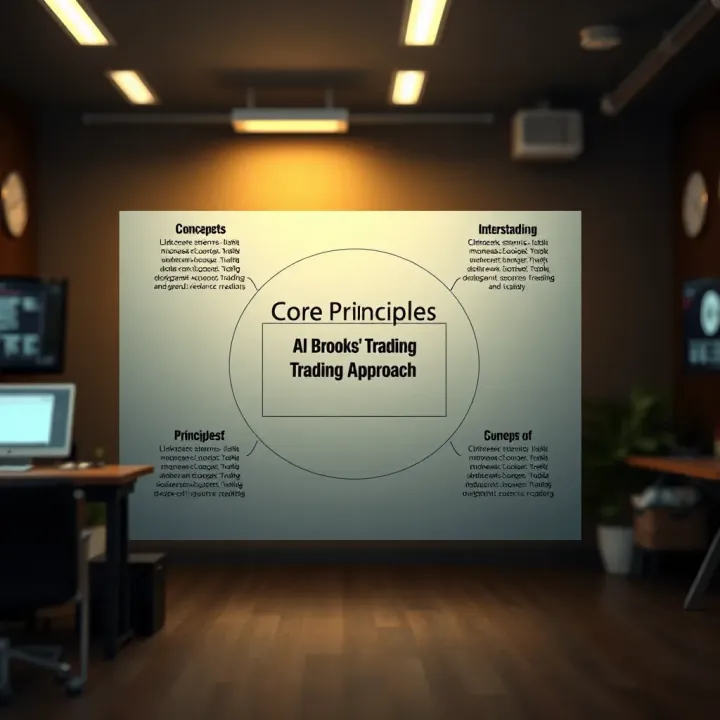
One of the key elements in Brooks’ philosophy is the idea that price tells a story. Each price bar reflects the battle between buyers and sellers, and understanding these dynamics can lead to more precise entries and exits. For instance, a series of small bars might suggest hesitation, signalling potential reversals or breakouts. This contrasts with common indicator-based trading, where signals can lag or overcomplicate analysis.
Brooks has authored several detailed books and courses, providing a systematic guide to his techniques. His writings break down complex price action concepts into clear sections, which traders can apply directly to live markets. Practical examples from real trading sessions help bridge theory and practice, making his work relevant for both beginners and experienced traders.
"Price action trading according to Brooks is less about finding the perfect setup and more about understanding the continuous flow of the market itself."
For traders in India and beyond, learning from Brooks can improve market analysis skills and offer a fresh perspective in a crowded trading environment. His focus on simplicity and price dynamics is particularly useful for those navigating volatile markets like the Nifty 50 or Sensex, where noise can mislead.
In the next sections, we will explore Al Brooks' core concepts, how his strategy compares to traditional methods, and practical steps to incorporate price action into your trading approach.
Introducing Al Brooks and his trading philosophy is key to grasping the depth of price action trading. His approach strips away complex indicators to focus on pure price movement, allowing traders to see what the market itself is signalling. This foundation is practical especially when markets behave unpredictably, as one can respond directly to what price does instead of relying on lagging tools.
For traders in India and beyond, understanding Brooks’ philosophy offers a way to decode charts with sharper eyes. It prioritises market psychology and patterns formed by price bars, helping traders make decisions in real-time rather than second guessing. This section sets the stage for learning Brooks’ methods effectively.
Al Brooks started out as an ophthalmologist. His medical background sharpened his analytical skills and attention to detail, which later helped him dissect price charts with precision. Trading began as a hobby during his medical career, but as the markets drew him in deeper, he shifted to trading full-time. This unique transition is practical proof that diverse skills, including those from medicine, can be useful in trading careers.
Brooks gained recognition by focusing solely on price action—studying price bars and their sequences to predict market behaviour. Over time, he published comprehensive books and shared his knowledge through seminars, building a strong following. His rise reflects the growing acceptance and demand for price-based trading, especially among those tired of over-complicated indicator strategies.
Brooks argues that price action itself contains all needed information. Instead of cluttering charts with moving averages, oscillators, or volume indicators, he trusts the price bars’ story. This approach saves traders from confusion caused by contradictory signals and helps them focus on actual market movement. Practically, this means traders must hone skills in interpreting subtle price changes, a discipline that fits well with India’s often volatile and news-driven markets.
Market moves reflect the collective decisions of buyers and sellers. Brooks highlights the importance of reading trader sentiment through patterns like rejection bars or strong trending bars. By understanding who is in control—buyers or sellers—traders can predict potential reversals or continuations. This mindset changes a trader from a passive indicator follower to an active market interpreter, which often yields better timing and confidence in placing trades.
Focusing on raw price data and psychology helps traders adapt quickly in markets where indicators often lag or give false signals.
This introduction provides a solid footing for those looking to explore Al Brooks’ impact on price action trading with a practical, no-nonsense approach.
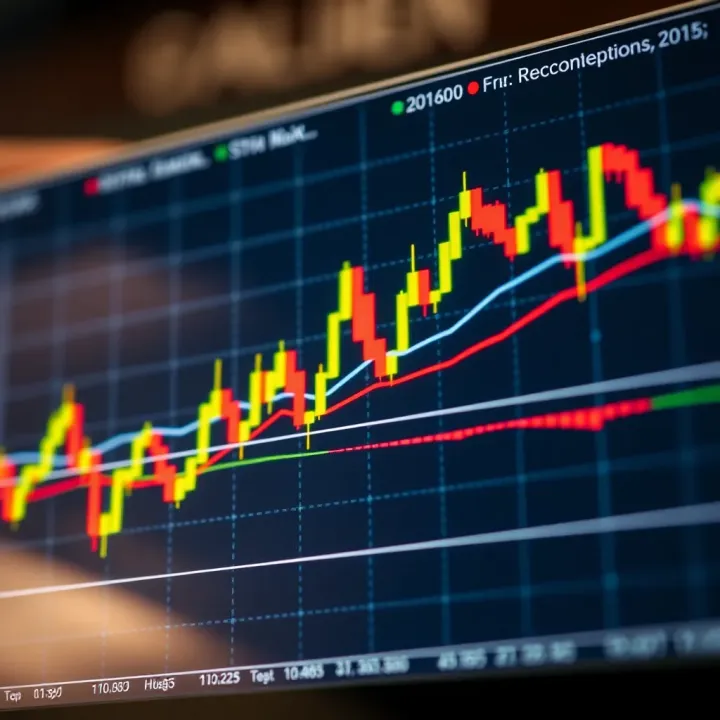
Al Brooks places strong emphasis on mastering the fundamental elements of price action trading. Understanding these basics equips traders with the tools to read raw market data effectively, avoiding reliance on indicators that often lag. His approach focuses on interpreting price through its immediate behaviour on charts, offering a practical way to gauge market sentiment and potential moves.
Identifying trends and ranges is foundational in Brooks' method. A trend shows a persistent directional move, either upward or downward, while a range signifies sideways price movement where buying and selling roughly balance out. For example, recognising an uptrend early lets a trader take long positions ahead of a climb, whereas detecting a range helps avoid false breakouts and exploits bounce trading between support and resistance.
Awareness of trend strength also matters. A slow, choppy rise may suggest uncertainty, whereas strong impulsive bars within a trend indicate commitment and potential continuation. This ability to discern shifts between trending and ranging phases can prevent unnecessary losses.
Understanding bar types and their significance is another critical skill. Each price bar — the open, high, low, and close within a time period — tells a story. For instance, Brooks highlights ‘trend bars’ that close near their highs or lows as signs of momentum, indicating buyer or seller control. Conversely, ‘inside bars’ creating smaller ranges suggest indecision that often precedes significant moves.
Recognising reversal bars, which close opposite to their direction of travel, allows early warning for trend changes. These nuances in bar interpretation help traders time entries and exits more precisely than simply following moving averages or other lagging signals.
Breakouts and pullbacks represent some of the most actionable setups in Brooks' system. A breakout occurs when price moves beyond a defined level like a high or low after a period of calm, signalling new momentum. Traders watch for breakout confirmation, usually with strong bars or increased volatility.
Pullbacks happen when price retraces after a breakout, offering a safer entry point at or near the breakout level. For example, after a strong upward breakout, a slight dip back to the breakout zone often attracts buyers, validating the breakout's strength. This strategy reduces the risk compared to chasing breakouts instantly, which can sometimes fail.
Reversals and continuation patterns help in understanding market pauses and turns. A reversal pattern indicates a shift in trend direction, useful for traders adjusting positions quickly to lock in profits or cut losses. Brooks studies patterns like double tops or bottoms and sharp reversals signalled by prominent bar formations.
Continuation patterns, on the other hand, suggest the trend is likely to resume after a brief pause. For instance, flags or rectangles on the chart mean price is consolidating before pushing further in the current direction. Distinguishing between genuine reversals and mere pauses is vital to avoid being caught on the wrong side of moves.
Mastering these core concepts from Al Brooks can help traders read markets with greater confidence, leading to better timing and risk control in trading decisions.
Understanding these basics takes practice but forms the backbone of effective price action trading, allowing traders to adapt swiftly to changing market conditions across different assets.
Understanding how to apply Al Brooks’ trading methods in real markets is key for traders seeking consistent results with price action analysis. His approach is deeply practical, focusing on reading price movements clearly and making decisions based on observable market behaviour rather than relying on lagging indicators or guesswork.
Brooks emphasises analysing price action through detailed observation of individual bars and their relationship to recent price history. Traders study patterns formed by bars in terms of highs, lows, opens, and closes. For instance, spotting a sequence of higher lows and higher highs can indicate an emerging trend, while choppy sideways bars often signal a ranging market. The practical benefit lies in recognising these setups early to enter or exit trades with greater confidence.
Developing a trading plan based on price action involves setting clear rules around when to enter, exit, and manage trades using price structure alone. Brooks encourages traders to define their strategy around breakouts, pullbacks, and reversal signals on the chart. For example, a trader might decide to enter on a breakout above a previous significant high with a stop loss just below the breakout point. This plan is simple but grounded in actual market behaviour, helping traders avoid emotional decisions and stick to disciplined execution.
Position sizing and stop losses are crucial for limiting downside risk in Brooks’ method. He recommends sizing trades relative to the distance between entry and stop loss so potential losses remain manageable. For example, if the stop loss is ₹200 away from entry price, the trader calculates position size such that risking ₹1,000 on that trade is acceptable. This systematic approach protects capital by ensuring no single trade can wipe out a large portion of the account.
Handling uncertainty and market noise is a persistent challenge Brooks addresses by advising traders to focus on high-probability setups and avoid reacting to every minor price fluctuation. Market noise can cause whipsaws that stop out traders prematurely. Thus, recognising when price action reflects meaningful moves versus random noise helps avoid overtrading. Brooks stresses patience and waiting for proper confirmation, reducing unnecessary losses in volatile conditions.
Applying Al Brooks’ techniques requires discipline but offers a practical framework to read raw price data for better trading decisions with controlled risk.
By mastering chart analysis and solid risk management, traders can implement Brooks’ price action approach effectively, even in fast-moving Indian markets like Nifty or Bank Nifty.
Al Brooks has significantly contributed to price action trading education through his detailed writings and teaching programmes. For traders wanting a deep dive into understanding market movements purely from price data without relying on indicators, his resources offer practical, real-world insights. These tools help build a solid foundation and sharpen the analytical mindset crucial for interpreting charts effectively.
Brooks’ main books provide a comprehensive guide into the nuances of price action trading. Titles like Reading Price Charts Bar by Bar and Trading Price Action Trends break down complex market behaviours into understandable segments. These books stand out because they don’t just show setups but also explain the psychology behind price moves, making it easier for traders to anticipate future shifts with confidence.
His writing style is notably dense but straightforward, aimed at traders willing to invest time in mastering the craft. Expect detailed explanations with numerous chart examples and thorough bar-by-bar analysis. While this approach demands patience, it equips readers with a refined ability to decode price action, which can give them a trading edge compared to more superficial strategies.
Besides books, Brooks offers workshops and online courses that allow traders to interactively develop their skills. These sessions often involve live market analysis and step-by-step guidance on recognising key setups and managing risks. Traders appreciate these formats for the direct experience in applying theory to real-time charts, making the learning process more dynamic and impactful.
Participating in Brooks' community forums and support groups adds further value. These platforms facilitate peer discussions, resolve doubts, and share fresh perspectives on evolving market conditions. For example, a trader might post a chart setup for feedback or debate the validity of a breakout signal in different contexts. Such interaction accelerates the learning curve and builds confidence in applying price action strategies independently.
Educational resources by Al Brooks are not quick fixes but tools for those committed to understanding market mechanics deeply through price action.
Overall, his educational materials blend theory, practice, and community support, catering well to serious traders ready to move beyond indicator dependency. For traders in India facing diverse market behaviours across NSE and BSE, Brooks' clear focus on price action offers a universal method that adapts well across equities, commodities, and forex markets.
Comparing Al Brooks’ price action trading approach with other strategies helps traders understand its unique focus and practical advantages. Unlike many strategies centred on technical indicators, Brooks’ method relies solely on price movements, which can offer a clearer picture of market sentiment without delay.
Al Brooks’ techniques emphasise reading raw price data — such as bar formations and candlestick patterns — instead of relying on technical indicators like moving averages or RSI (Relative Strength Index). Indicators often lag price because they are derived from historical data averages. This lag can cause traders to react late, missing optimal entry or exit points. Price action trading, however, interprets the market’s real-time behaviour by observing how price moves bar by bar, providing immediate response cues.
For example, a moving average crossover might signal a trend change only after price has moved significantly, whereas a breakout bar on a chart can offer an earlier warning. Brooks stresses that price itself reflects the collective market psychology and is the most direct source for trading decisions. This approach removes dependence on multiple indicator confirmations that sometimes contradict each other, thus simplifying the decision process.
Price action trading works well across various asset classes — be it stocks, commodities, forex, or indices. Because it focuses on raw price movement, traders who understand Brooks’ setups can apply the method consistently, regardless of market volatility or conditions. For instance, the same bar pattern indicating a reversal on a Nifty chart often applies to other markets, such as crude oil futures or USD/INR currency pairs. This universality means traders need not learn multiple indicator configurations for different markets, making it a flexible strategy.
Adaptability is a key reason many professional traders admire Brooks’ approach, as it keeps their toolkit streamlined yet effective.
That said, price action trading is not without challenges, especially for novices. Since it emphasises detailed reading of price bars and subtle patterns, beginners may find it overwhelming to distinguish significant signals from noise initially. Unlike indicator-based systems that often provide clear “buy” or “sell” alerts, Brooks’ approach requires developing a feel for market rhythm and context over time.
Moreover, Brooks advocates for extensive practice and study, including reviewing historical charts repeatedly. This depth of analysis requires patience, which some new traders might lack when expecting quick results. Beginners might also struggle with managing emotions and discipline since price action trading involves close, real-time decision-making without predefined indicator rules.
Despite these hurdles, mastering this approach offers a strong foundation for understanding market dynamics that can enhance any trader’s skill set.
Overall, understanding where Al Brooks’ price action trading stands compared to other strategies allows traders to decide if this hands-on, data-focused method fits their style and market goals.
Explore QX trading 📊 with insights on concepts, tools, strategies, risks, technology, and regulations—practical guidance for traders in the Indian market.

📈 Explore real trading platforms in India with our practical guide. Learn how they work, key features, security tips, and choose the best fit for your trading journey.

📈 Learn how Quotex trading signals work, their types, benefits, and risks. Get practical tips to boost your trading moves effectively in India's market.

Explore Qutex in detail 📘 Learn about its technology, applications across fields, and future prospects in this comprehensive guide for curious minds.
Based on 11 reviews