
Understanding Qutex: A Clear Guide
Explore Qutex in detail 📘 Learn about its technology, applications across fields, and future prospects in this comprehensive guide for curious minds.
Edited By
James Bennett
The DAX index stands as Germany’s main stock market indicator, tracking the performance of 40 major blue-chip companies listed on the Frankfurt Stock Exchange. These firms represent a broad spectrum of industries, including automotive, chemicals, banking, and technology, painting a clear picture of Germany’s economic health. For investors, especially those in India looking to diversify beyond local markets, understanding the DAX provides insight into global economic trends and investment opportunities.
The index operates as a performance index, meaning it factors in dividends paid by its constituent companies, unlike simple price indices. This provides a more accurate reflection of total shareholder returns. The DAX's value is calculated using the free-float market capitalisation method, which considers only the shares available for public trading. This avoids distortions that arise from shares held by promoters or insiders.
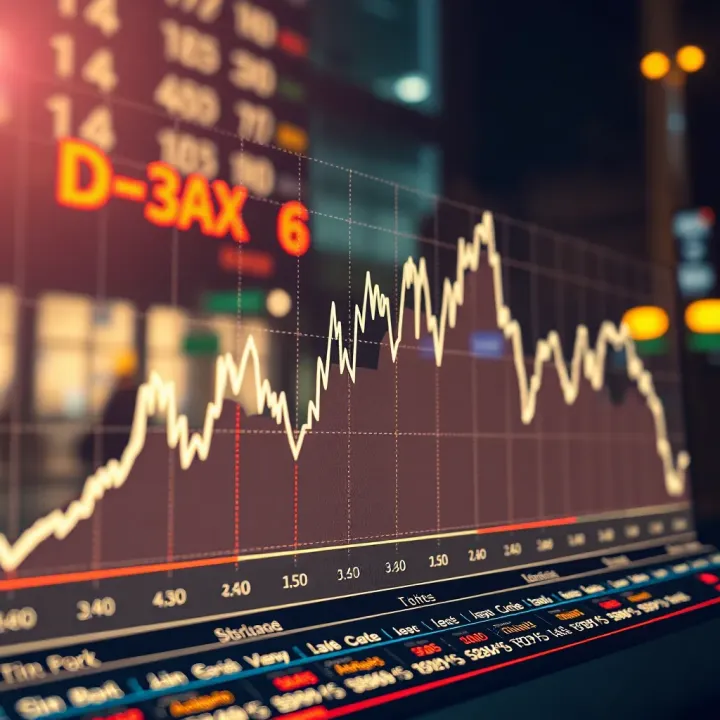
The DAX is more than just a list of companies—it symbolizes the heartbeat of Germany’s economy, influencing and reflecting investor sentiment worldwide.
Key components of the DAX include corporate giants like Siemens, Volkswagen, SAP, and Bayer. These companies are household names globally and carry significant weight in the index, affecting its daily movements. Their individual performance often marks investor confidence not just in Germany, but in the broader European market.
Investors should note that the DAX is subject to economic and geopolitical factors, including EU policies, global trade dynamics, and currency fluctuations. For example, during the Eurozone crisis or shifts in US-China trade relations, the DAX showed notable volatility, presenting both risks and opportunities.
For Indian investors, the DAX offers a window to participate in developed market growth and diversification. With platforms allowing international trading and exchange-traded funds (ETFs) tracking the DAX becoming more accessible, tapping into this index has never been easier.
Understanding how the DAX works, its components, and the external factors influencing it equips traders and advisors to make more informed decisions. This knowledge helps identify patterns, assess market health, and strategise investments with a global perspective rather than staying India-centric alone.
The DAX index stands as a key benchmark for Germany's stock market, reflecting the overall health of the country's leading companies. Understanding the DAX is essential for investors looking to expand beyond Indian markets, as it offers insights into Europe’s largest economy and global business trends. The following sections will break down the basics of the DAX, why it matters, and how it mirrors Germany’s economic activity.
The DAX, short for Deutscher Aktienindex, tracks the performance of the top 40 German blue-chip companies listed on the Frankfurt Stock Exchange. Unlike many indexes that cover more companies, the DAX focuses on highly influential firms like Siemens, Volkswagen, and BASF. These companies operate both within Germany and internationally, making the index a significant gauge of German business strength.
Investors closely watch the DAX because it offers a window into European industrial and technological development. For example, during the rise of the renewable energy sector, companies within the DAX that invested in clean technology showed noticeable gains. The index serves not only as an investment benchmark but also as a barometer for economic confidence, especially in industries where Germany leads globally.
The DAX combines the value of individual company shares to indicate the overall market direction, making it a practical tool for traders and analysts alike.
The DAX mirrors Germany’s economy in several ways. Its composition covers a broad range of sectors—including automotive, chemicals, telecommunications, and financial services—which are pillars of the German economy. When Germany's industrial output grows, companies listed in the DAX often see their stock prices rise, boosting the index.
On the other hand, events like a drop in German exports or shifts in EU trade policies tend to affect the DAX directly. Take, for example, the impact of Brexit negotiations, which influenced the export-dependent companies in the index, causing fluctuations. The DAX can thus signal changes in Germany’s economic health quickly, providing valuable clues for investors.
This connection is especially relevant for Indian investors monitoring global markets. Understanding how the DAX moves can help assess risks and opportunities in industries connected to Germany, such as automobile exports or chemical production.
In sum, the DAX’s design and function make it more than just a stock metric; it’s a snapshot of Germany’s economic heartbeat, useful for anyone interested in European market dynamics or multinational investments.
Understanding how the DAX index is calculated and structured is key for anyone looking to follow or invest in the German market. The DAX represents the performance of Germany’s top 40 companies listed on the Frankfurt Stock Exchange. Its calculation method and component selection ensure the index accurately reflects Germany’s economic pulse.
The DAX is a total return index, meaning it includes dividends paid by its constituent companies in its performance. This contrasts with many indices that only factor in price movements. Because dividends contribute a significant part of returns, the DAX's calculation presents a fuller picture of investor gains.
Instead of simple price weighting, the DAX uses free-float market capitalisation weighted methodology. This means larger companies with more shares available for trading have a bigger influence on the index level. For example, automotive giant Volkswagen drives the DAX more substantially than smaller firms since its free-float market cap is much higher.
Weights are adjusted regularly to reflect changes in share distribution after events like stock buybacks or fresh issuances. This dynamic weighting keeps the DAX current and representative of market realities.
The free-float market-cap weighting ensures the DAX mirrors the economic significance of its companies, not just their stock prices.
To get included in the DAX, a company must be a large-cap with primary listing on the Frankfurt Stock Exchange. It must meet liquidity and free float requirements, ensuring enough shares are publicly traded to make its stock a reliable market indicator. Size is measured through market capitalisation and order book volume.
Companies are reviewed quarterly, and underperformers can be replaced by better candidates. This keeps the DAX fresh, preventing stagnation with outdated or less relevant firms.
The DAX covers a wide range of sectors, but it is especially strong in automotive, chemicals, pharmaceuticals, and industrial engineering. Key players include Deutsche Bank, Siemens, BASF, and Bayer. This sectoral diversity provides investors with exposure to various parts of Germany’s strength in manufacturing and technology.
Understanding which companies and sectors dominate the DAX helps investors assess macroeconomic impacts on the index. For instance, a global dip in the automobile sector can greatly influence DAX performance due to the weight of car manufacturers.
By knowing the composition and weighting method, investors are better equipped to interpret fluctuations in the DAX and position their portfolios accordingly.
Examining the historical performance and trends of the DAX index sheds light on how Germany's economy and its major companies have evolved over time. This perspective helps investors, analysts, and traders understand the index’s behaviour during different phases of market cycles and the impact of key events. Such insights prove useful for making informed decisions based on past patterns rather than relying solely on current data or speculation.
Since its inception in 1988, the DAX has experienced significant milestones that reflect broader economic shifts. For instance, it first crossed the 10,000-point mark in 1998, signalling strong growth in the German stock market during the tech boom. However, this was followed by a sharp decline during the dot-com bust in the early 2000s. More recently, the index surged past 13,000 points shortly before the Covid-19 pandemic, then swiftly recovered after a steep fall.
Market cycles are apparent in the DAX's history: alternating phases of optimism and downturns align with economic expansions and recessions. Understanding these cycles is key for investors watching the DAX, as it helps anticipate periods of volatility and potential opportunity. For example, the financial crisis in 2008 caused the DAX to fall by nearly 50%, but the recovery phase that followed rewarded patient investors over several years.
Global financial crises inevitably leave a mark on the DAX due to Germany’s integral role in international trade and finance. The 2008 crisis, triggered by the US subprime mortgage collapse, led to a panic sell-off in equity markets worldwide, including the DAX. This event forced many DAX constituents to adjust strategies amid tightening credit and shrinking demand.
In practical terms, Indian investors tracking the DAX should watch for such crises as early warning signals affecting not just German stocks but global markets broadly. The ripple effects can influence exchange rates, commodity prices, and cross-border investments, making the DAX a useful barometer of global market health.
The DAX is particularly sensitive to decisions and developments within the European Union (EU), given that many listed companies generate substantial revenue from EU countries. Events like Brexit caused temporary shocks with increased volatility as uncertainty around trade and regulations rose.
More broadly, EU policies on trade, tariffs, and economic stimulus packages impact business confidence and earnings potential for the DAX firms. For example, EU sanctions or environmental regulations can either constrain or create new opportunities for these companies. Hence, following EU political and economic movements provides important context for assessing the index’s future outlook.
Keeping an eye on historical trends and major events affecting the DAX helps investors anticipate risks and pinpoint entry points, especially when looking to diversify beyond Indian markets.
Overall, understanding the DAX's historical performance and reactions to global and European economic events paints a clearer picture of its behaviour during turbulent and stable periods. This knowledge supports more confident investment choices in a complex and interconnected market environment.
The DAX Index holds considerable appeal for investors looking to diversify beyond Indian markets. It reflects 40 major German blue-chip companies, offering exposure to sectors like automotive, chemicals, technology, and finance. Since these companies are global players, investing in the DAX provides access to the European economy and international trade trends, which seldom correlate directly with Indian market movements. This can benefit portfolio diversification and risk management.
Indian investors cannot buy the DAX index directly but can invest through several routes. Exchange-Traded Funds (ETFs) listed on Indian stock exchanges like NSE and BSE track the DAX's movements, enabling easy access via a Demat account. For example, some ETFs replicate the DAX index by holding shares of its constituent companies or by using derivatives.
Another option is to invest in mutual funds or international portfolio funds that include European stocks. Some brokers also offer access to foreign stock exchanges, allowing direct purchase of shares of individual German companies listed in the DAX.
Platforms like ICICI Direct, Zerodha, and HDFC Securities have been expanding their capabilities for such investments, often with simplified KYC and repatriation processes. However, investors should be mindful of currency exchange rates, taxation on overseas investments, and compliance with Reserve Bank of India's (RBI) Liberalised Remittance Scheme (LRS), which currently caps outward remittances at ₹ 7 lakh annually per individual.
Investing abroad requires clear understanding of regulatory limits and tax implications.
The DAX offers opportunities through its diversified sectoral mix and the presence of globally competitive firms like Siemens, Allianz, and Volkswagen. It can serve as a hedge against domestic market volatility, especially for investors relying heavily on Indian equities.
That said, currency risk is a significant factor. Fluctuations in the euro-rupee exchange rate can affect returns, sometimes offsetting gains made on the index itself. Also, political or economic events in Europe — like changes in the European Central Bank’s policies, Brexit spillovers, or Eurozone debt issues — can impact the DAX.
Moreover, some sectors within the DAX are cyclical, for example, automotive and manufacturing. Such exposure means investors might face heightened volatility during global economic slowdowns or trade tensions.
Balancing these risks, systematic investment via SIP-like options through ETFs can help average out market swings. For Indian investors with a longer-term horizon, it can be a valuable component of a diversified portfolio, providing international exposure and potential for capital appreciation over time.
In summary, while investing in the DAX brings unique benefits unavailable in purely domestic funds, cautious evaluation of currency risks, tax laws, and sectoral exposure is necessary to harness its full potential.
Understanding how the DAX compares with global stock indices like India’s Sensex and Nifty offers useful insights for investors keen on diversification and market analysis. Every index represents differing economies, sectors, and investor sentiments. Comparing the DAX with others helps grasp its unique features, risk factors, and growth potential. This perspective allows traders and analysts to make informed decisions when allocating capital across countries.
The DAX includes 40 major German companies listed on the Frankfurt Stock Exchange, weighted by free-float market capitalisation. It reflects Germany’s export-oriented, industrial economy with heavyweights like Siemens, Volkswagen, and Bayer. In contrast, India’s Sensex and Nifty represent top companies on the Bombay Stock Exchange (BSE) and National Stock Exchange (NSE) respectively. Sensex tracks 30 companies, while Nifty includes 50, covering more sectors like IT, pharmaceuticals, and banking, which hold greater weight in India’s economy.
Sector composition underscores these differences. The DAX leans heavily on automotive, chemicals, and machinery industries. Sensex and Nifty, meanwhile, have significant contributions from IT giants such as Tata Consultancy Services (TCS) and Infosys plus banking leaders like HDFC Bank and ICICI Bank. This sectoral mix impacts volatility and growth patterns, with Indian indices exhibiting responsiveness to domestic consumption trends, while DAX ties closer to global industrial cycles.
Further, market hours and trading practices vary. DAX trades during European hours, overlapping less with Indian markets, which can affect real-time arbitrage or hedging strategies. Also, dividend yields on DAX stocks tend to be higher on average compared to Indian indices, reflecting differences in investor preferences and corporate policies.
For Indian investors, knowing these distinctions is key when considering international exposure versus local holdings.
The DAX plays an influential part in global financial markets due to Germany’s status as the Eurozone’s largest economy. It acts as a barometer for European industrial health and global trade trends. Movements in the DAX often impact other indices across Europe and can influence commodity prices, especially in sectors like automotive and manufacturing.
Notably, the DAX often correlates with broader European indices such as the Euro Stoxx 50, but shows less direct correlation with emerging market indices like Sensex or Nifty. This difference offers portfolio diversification. For example, during times when Asian markets face volatility due to domestic factors, the DAX may remain stable or trend differently owing to separate economic drivers.
Moreover, global investors, including mutual funds and pension funds, track the DAX to adjust European exposure. Its constituents are multinational corporations with extensive operations worldwide. Hence, changes in global regulations, trade tariffs, or geopolitical events involving Europe ripple through the DAX, making it a critical indicator.
Indian investors venturing beyond home markets should consider the DAX’s international role alongside local benchmark indices. This balance provides a clearer view of global risk and opportunity, especially in an interconnected economy.
Explore Qutex in detail 📘 Learn about its technology, applications across fields, and future prospects in this comprehensive guide for curious minds.
Explore QX trading 📊 with insights on concepts, tools, strategies, risks, technology, and regulations—practical guidance for traders in the Indian market.
📈 Learn how Quotex signals work, their pros and cons, safety tips, and smart tools to boost your binary options trading success in India.
📈 Discover how to use Quotex free signals effectively, assess their reliability, and compare them with other trading signals for smarter decisions.
Based on 10 reviews