

Qutex Trade Login Guide for Indian Users
🔐 Learn how to easily log in to Qutex Trade from India! Get account setup tips, troubleshoot login issues, and keep your trading profile secure. 📈
Edited By
Ethan Price
Trading the EUR/USD pair is popular among Indian traders due to its liquidity and tight spreads. This currency pair reflects the exchange rate between the euro and the US dollar, two of the world’s most influential economies. Understanding the best time to trade EUR/USD from India involves knowing how global market sessions align with Indian Standard Time (IST) and how these periods affect volatility and trading opportunities.
The forex market operates 24 hours a day, divided mainly into four sessions: Sydney, Tokyo, London, and New York. For traders in India, converting these session times into IST is crucial to plan trades effectively. The London and New York sessions hold the most significance for EUR/USD due to their overlapping active trading hours, which often result in higher price movements.

Tip: The overlap between London and New York sessions, roughly from 6:30 pm to 10:30 pm IST, usually offers the most liquidity and volatility for EUR/USD, making it a prime window for active traders.
While the Tokyo session influences Asian currencies more directly, it still impacts EUR/USD due to the yen's relationship with the dollar. Therefore, EUR/USD may see moderate movement during early Indian morning hours, roughly 4:30 am to 12:30 pm IST.
Indian traders must also consider global economic events and news releases that can cause sudden spikes in volatility outside typical session hours. Tracking announcements by the European Central Bank (ECB) and the US Federal Reserve is helpful in timing trades.
In short, prioritising the London and New York sessions from 6:30 pm to 10:30 pm IST typically provides the best trading conditions for EUR/USD in India. Planning around these times supports making the most of liquidity and price swings while managing risks effectively.
The EUR/USD currency pair is the most actively traded in the foreign exchange market worldwide, making its understanding vital for any trader focusing on this pair. For Indian traders, this knowledge helps in grasping factors that influence price movements and timing trades effectively to maximise profits and reduce risks. By understanding the dynamics of EUR/USD, you can better anticipate how economic events from both Europe and the US impact the currency pair, helping you navigate the volatile forex market with more confidence.
EUR/USD represents the exchange rate between the Euro, the official currency of the Eurozone, and the US Dollar, the world’s primary reserve currency. This pair is known for tight spreads and excellent liquidity, meaning you can usually buy or sell without much price slippage, even during volatile periods. For instance, during the London-New York session overlap, liquidity spikes, making prices more stable and trading easier.
Its price is often quoted as how many US Dollars one Euro can buy, and this rate fluctuates constantly based on supply and demand among traders, businesses, and central banks. Indian traders benefit from this high liquidity since it reduces transaction costs and provides many opportunities for short-term trading strategies, such as scalping or day trading.
European economic data like GDP growth, inflation rates, unemployment figures, and European Central Bank (ECB) policy decisions significantly influence the EUR/USD pair. For example, if the ECB signals a hike in interest rates due to rising inflation, the Euro generally strengthens against the US Dollar. Conversely, weak industrial production or poor consumer sentiment can lead to Euro depreciation.
For Indian traders, closely following releases such as the German Ifo Business Climate index or France’s consumer confidence reports gives an edge. These indicators often shape the market sentiment around the Euro, impacting short to medium-term price directions.
Parallelly, US economic releases hold equal if not more sway over EUR/USD. Data points like Non-Farm Payroll (NFP), Federal Reserve interest rate decisions, CPI inflation, and retail sales affect the US Dollar strength. A strong jobs report, for instance, tends to boost the USD, pushing EUR/USD down, while disappointing data can weaken the USD and lift the pair.
Since the US dollar functions as the counter currency, Indian traders should pay special attention to the US economic calendar. These data points often lead to sharp movements, especially if they surprise the market beyond expectations.
Events such as Brexit debates, US-China trade tensions, or political unrest in Europe impact EUR/USD volatility considerably. Such geopolitical risks introduce uncertainty, often leading traders to seek safe-haven currencies like the US Dollar, resulting in Euro weakness.
For example, during the 2019 Brexit uncertainty, EUR/USD saw spikes in volatility as investors tried to gauge outcomes. Indian traders need to stay updated with global political developments and understand their potential spillover effects on forex markets, especially since geopolitical surprises can create sudden, sharp price swings.
Keeping track of economic indicators and geopolitical events from both Europe and the US allows traders to make informed decisions. This understanding forms the foundation of effectively timing trades in EUR/USD from India.
By recognising these key features and influencing factors, Indian traders can develop strategies that take market timings and risk management into account, improving their overall trading performance in the EUR/USD market.
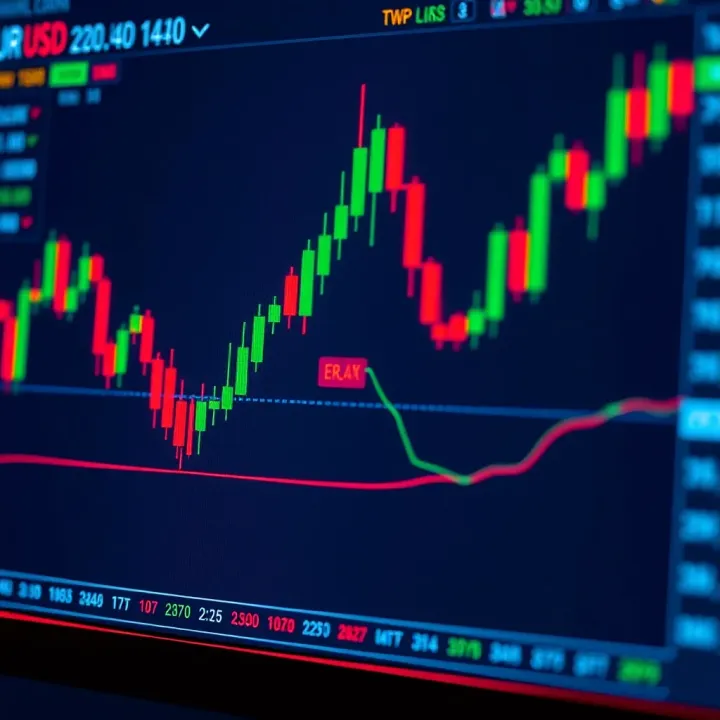
Understanding Forex market sessions is key to knowing when the EUR/USD pair is most active and predictable. The Forex market operates 24 hours but is divided into distinct sessions based on major financial centres. Each session affects liquidity and volatility differently, which traders in India must keep in mind to time their trades advantageously.
The London session is crucial for EUR/USD given London's position as a global financial hub. It runs roughly from 8:00 am to 5:00 pm GMT, which translates to 1:30 pm – 10:30 pm IST. During these hours, the market sees high trading volumes and volatility. The euro is particularly active then because European banks and financial institutions are open, influencing prices based on economic data, policy announcements, and market sentiment. For Indian traders, this session aligns well with late afternoon and evening hours, making it convenient to participate without odd trading times.
The New York session overlaps partly with the London session but runs from 1:00 pm to 10:00 pm EST (10:30 pm – 7:30 am IST). It has a more pronounced impact on the USD side of the pair. US economic releases, Federal Reserve announcements, and market reactions create distinct price movements. Indian traders often watch this session overnight or early morning, and it offers good liquidity but requires careful timing due to lower overlap with Indian working hours.
Operating from 11:00 pm to 8:00 am JST (7:30 pm – 4:30 am IST), the Asian session sees lower volatility for EUR/USD compared to London and New York. The major players here are the Japanese yen, Australian dollar, and New Zealand dollar. For Indian traders, this session falls late in the evening to early morning, so trading EUR/USD here often means lower liquidity and less price movement, which might not suit aggressive trading strategies.
The period from 1:00 pm to 5:00 pm EST (10:30 pm – 2:30 am IST) when both London and New York markets are open is the busiest trading window. The combined activity of European and American traders results in peak liquidity and wider price swings in EUR/USD. This overlap period is ideal for Indian traders seeking more volatility to capitalise on intraday moves, but risk management becomes critical as price moves can be swift.
There is a minor overlap between the late Asian session and early European session during 7:00 am to 8:00 am GMT (12:30 pm – 1:30 pm IST). While this period has less liquidity than the London-New York overlap, it still sees increased activity that can produce meaningful price changes. Indian traders might watch for market-opening trends during this time, especially on days when European data releases are scheduled.
Efficient trading in EUR/USD requires awareness of these session timings and overlaps to harness liquidity peaks. For Indian traders, synchronising their schedules with these sessions enables better strategy execution and risk control.
Timing plays a big role when trading the EUR/USD pair from India. The forex market runs 24 hours but liquidity and volatility vary throughout, so knowing the right hours helps you trade smarter. Since India is several hours ahead of major forex hubs like London and New York, converting those global market timings into Indian Standard Time (IST) is essential. This way, you align your trading activity with the most active periods, boosting your chances of catching profitable moves.
Forex sessions follow the clock of key financial centres across the world. The London session, for instance, typically runs from 8 am to 5 pm GMT. This translates roughly to 1:30 pm to 10:30 pm IST during Indian winter (October to March) and 12:30 pm to 9:30 pm IST during summer (April to September). Similarly, the New York session spans 1 pm to 10 pm EST, which is around 10:30 pm to 7:30 am IST.
Understanding these conversions helps Indian traders plan their day effectively. For example, if you want to trade during times with the highest activity, you must consider that London’s peak overlaps with early New York hours. This period falls in the evening for Indian traders, often when they’re free from regular work.
The best time to trade EUR/USD is when liquidity peaks, meaning more buyers and sellers are active, leading to tighter spreads and smoother trades. The London-New York overlap between 6:30 pm and 10 pm IST is a prime window. During this time, the EUR/USD experiences heavy volume because both European and American markets are open, driving frequent price movements.
Another notable period is the London session opening from around 12:30 pm to 3 pm IST, when European traders start their day. If you trade during these hours, you benefit from higher liquidity which reduces slippage and transaction costs—key factors for both intraday and swing traders.
Volatility shows how much the price moves in a given period. While high volatility means more trading opportunities, it also brings risk. For Indian traders, the London session's first few hours (12:30 pm to 2:30 pm IST) tend to see sharp moves, often triggered by European economic reports or geopolitical news.
Similarly, the New York session from 10:30 pm to 1 am IST often shows volatility bursts, especially when the US releases major economic data. Traders need to balance the chance of profit against the possibility of unexpected swings. Using appropriate risk management during these times will help protect capital while taking advantage of the market’s dynamism.
For Indian traders, trading EUR/USD during the London-New York overlap offers the best combination of liquidity and volatility, making it an ideal window for focused trading.
Planning trades around these timings and understanding IST conversions empowers Indian traders to interact with the EUR/USD market when conditions are favourable, ultimately improving trading outcomes.
Trading the EUR/USD pair in India requires strategies that fit local market hours, liquidity swings, and volatility patterns. Choosing the right approach helps traders align with global market rhythms and manage risks effectively while making the most of their trading capital.
Day trading focuses on capitalising on short-term price moves within a single day, making it ideal when markets are highly active. For Indian traders, the best time for day trading EUR/USD often coincides with the London-New York overlap, roughly between 7:30 pm and 12:30 am IST, when volatility peaks. This period offers quick opportunities but demands constant attention and swift decision-making.
Swing trading, on the other hand, suits those who prefer holding positions over days or weeks to catch broader trends. Since EUR/USD experiences larger directional moves during economic cycles and geopolitical events, swing traders in India can plan trades around these factors without the need to monitor the charts daily. For example, a swing trader may enter a position after an interest rate announcement, holding it while the trend develops.
Economic calendars tracking US and European announcements are crucial for EUR/USD traders. Events like US Non-Farm Payrolls or European Central Bank (ECB) rate decisions often cause sharp volatility that plays a big role in the currency’s movement. Indian traders should align their trading times with these calendars, preparing for spikes in activity that appear around 7:30 pm IST for US data and 1:30 pm IST for ECB releases.
Understanding the timing and impact of these releases can help traders position themselves advantageously, rather than reacting late to sudden price swings.
Managing risk during such high-impact events is a key part of trading this pair. Given the quick price jumps, traders should use stop-loss orders to cap potential losses. Many also reduce position sizes or even refrain from trading just before major announcements to avoid unexpected swings. For instance, closing or limiting exposure before the US Federal Reserve’s policy announcement can prevent a sudden adverse move wiping out profits or capital.
In short, combining awareness of global economic events with sound risk management equips Indian traders to handle EUR/USD’s volatility more confidently. This practical approach improves trade success chances while protecting hard-earned capital from unpredictable market shocks.
Trading the EUR/USD pair involves navigating significant volatility due to the constant flow of economic data and geopolitical events from both Europe and the US. Managing this volatility effectively is essential to protect your capital and improve your chances of consistent profits. Indian traders need to understand how the pair behaves during different sessions and economic releases to tailor their risk management strategies accordingly.
The EUR/USD currency pair shows distinct volatility patterns tied to global trading sessions. The highest volatility usually occurs during the London and New York sessions, especially in their overlap between 7:30 pm and 11:30 pm IST. During this time, liquidity surges, and the pair may experience sharp swings in response to news. For example, US Non-Farm Payroll (NFP) data releases often cause sudden moves within minutes, even pushing the price 50 to 100 pips.
In contrast, volatility tends to be lower during the Asian session, from roughly 3:30 am to 12:30 pm IST, when major European and US markets are closed. Understanding these patterns helps Indian traders plan entry and exit points and avoid times when unpredictable swings might not fit their risk tolerance.
Stop-loss orders help traders limit losses by automatically closing a position at a predetermined price. For EUR/USD, where rapid moves can happen within seconds, having a stop-loss protects against unexpected swings. For example, if you enter a long position at 1.1000, placing a stop-loss at 1.0980 caps your loss at 20 pips. Without a stop-loss, a sudden spike against your position could wipe out more than you planned. This technique is simple yet critical for preserving capital and maintaining discipline.
Position sizing involves adjusting the size of your trade according to your risk tolerance and capital. Instead of risking a fixed number of pips, Indian traders should decide on a percentage of their account—for instance, 1% or 2%—that they are willing to lose on any trade. If your stop-loss is 20 pips, and you only want to risk ₹2,000 in a ₹1 lakh account, your lot size needs to be sized so that a 20-pip loss equals ₹2,000. This approach reduces the chances of large drawdowns and allows you to trade consistently without emotional pressure.
Avoiding overtrading is vital as excessive trading can lead to higher transaction costs and poor decisions driven by impatience or the desire to recover losses quickly. Given the EUR/USD’s volatility, entering too many trades can expose traders to unnecessary risk. For example, a trader might be tempted to jump in after every minor pullback but ends up buying at the wrong moment. Limiting yourself to the best trading hours and waiting for clear setups helps maintain focus and improves the quality of trades.
"Risk management isn’t about avoiding losses entirely—it’s about limiting them so you can trade another day with a healthy account."
Applying these techniques in tandem helps Indian traders manage the EUR/USD's inherent volatility and trade with greater confidence and sustainability.
🔐 Learn how to easily log in to Qutex Trade from India! Get account setup tips, troubleshoot login issues, and keep your trading profile secure. 📈

💰 Learn about Quotex withdrawal time, common delays, payment methods & tips for smooth transactions. Navigate your funds in India hassle-free today! 🇮🇳

📋 Step-by-step Quotex registration guide for Indian users! Learn account setup, verification, tips, and how to avoid common issues for a smooth start.

Learn how to deposit funds on Quotex with clear info on payment methods, fees, processing times, and security 🔐. Perfect for Indian traders!
Based on 7 reviews