
QXBroker Review: Features and User Insights for Indian Traders
Explore QXBroker's features, account types & services designed for Indian traders 🇮🇳. Learn about platforms, deposits, support, and security here! 💹🔒
Edited By
Emma Sinclair
Solana (SOL) has quickly grabbed attention as one of the leading blockchain platforms known for its high speed and low transaction fees. However, the question many traders and investors ask is whether SOL can reach the ambitious price of $10,000. This section looks at the current standing of Solana in the crypto world, unpacking the factors that could push its value to such levels and highlighting the hurdles in the way.
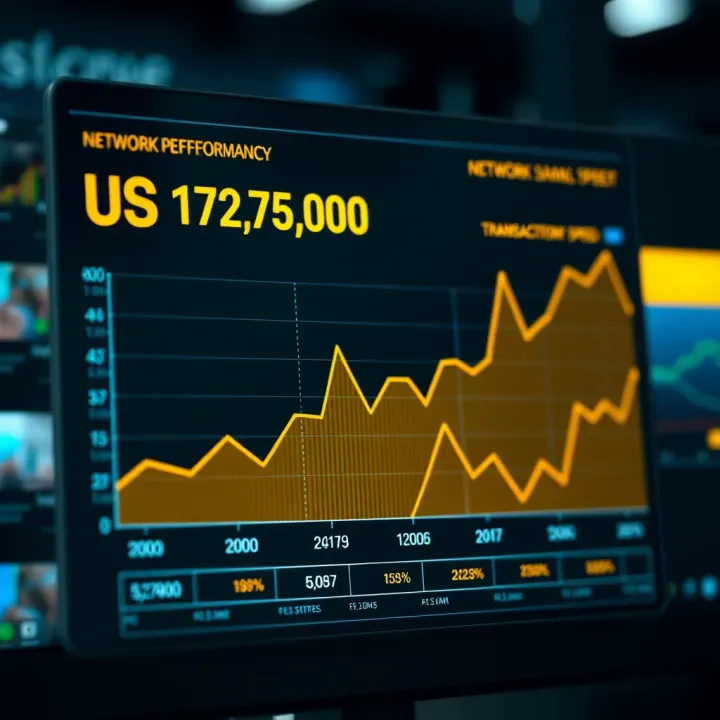
Solana's main appeal lies in its technology. It uses a unique proof-of-history mechanism combined with proof-of-stake, allowing it to process tens of thousands of transactions per second. This speed makes it highly suitable for decentralised finance (DeFi), NFTs, and other applications, providing a competitive edge compared to Ethereum and others that face scalability issues.
Currently, SOL ranks within the top cryptocurrencies by market cap, backed by a growing ecosystem of developers and users. Several factors could drive its price upward:
Ecosystem Expansion: More projects launching on Solana means increased demand for SOL tokens.
Adoption in DeFi and NFTs: If the platform continues to attract these sectors, its network value may rise.
Partnerships and Integrations: Collaborations with major players could boost credibility.
At the same time, Solana faces notable challenges:
Network Outages: Past incidents have raised concerns about reliability.
Competition: Other blockchains like Binance Smart Chain and Polygon continue to grow fast.
Regulatory Risks: Indian and global crypto regulations remain uncertain and could affect prices.
Achieving a $10,000 price tag for SOL would require not just technological success but also sustained ecosystem growth, user trust, and favourable market conditions.
Knowing these points helps investors and enthusiasts set realistic expectations about Solana's future. The rest of the article explores these themes in depth, providing clarity on what needs to happen for SOL to hit that target price.
Understanding Solana's blockchain technology and its position in the cryptocurrency market sets the foundation for assessing whether it can hit the ambitious $10,000 mark. This section explains what differentiates Solana from others and how its market trends reflect investor behaviour and potential growth.
Solana uses a unique consensus mechanism called Proof of History (PoH) combined with Proof of Stake (PoS). PoH timestamps transactions efficiently, allowing the network to process up to 65,000 transactions per second, far exceeding Ethereum’s average. This speed is crucial for applications like decentralized finance (DeFi) and non-fungible tokens (NFTs) that demand quick, low-cost transactions.
What sets Solana apart is its single-layer architecture, which handles validation and consensus in one go. Unlike Ethereum, which relies on layer-two solutions to scale, Solana itself manages high throughput without compromising decentralisation significantly. For instance, its Gulf Coast-based Solana Labs designed the system to prioritise speed, reducing transaction fees to fractions of a rupee, attracting developers and users alike.
Solana's price history showcases rapid growth punctuated by volatility. In 2021 alone, SOL soared from roughly $1.50 in January to an all-time high near $260 by November, reflecting growing interest in its technology and ecosystem. However, corrections followed as the crypto market cooled, demonstrating typical investor profit-booking and broader market fluctuations.
Currently, Solana ranks among the top ten cryptocurrencies by market capitalisation, maintaining a strong presence despite competition. This positioning gives it credibility and liquidity, making it a favoured choice for institutional and retail investors. Its market cap provides a useful benchmark: to reach $10,000 per token, Solana’s valuation would have to scale exponentially, stretching beyond established leaders like Bitcoin and Ethereum, which invites a thorough evaluation later in this article.
Solana’s unique technology combined with its current market standing forms the lens through which we analyse its price potential and challenges ahead.
Solana's price growth depends heavily on several key drivers that influence market demand and adoption. Understanding these factors helps investors gauge whether reaching ₹10,000 per SOL token is achievable. Let's look at critical elements like decentralised application (DApp) growth, technology upgrades, and market sentiment that could push Solana's value upwards.
Growth in DeFi projects on Solana
Decentralised finance (DeFi) has been a major catalyst for blockchain token valuations. Solana's fast transaction speeds and low fees make it an attractive platform for developers building DeFi protocols, such as lending platforms, stablecoins, and yield farming. For example, platforms like Serum and Raydium have forged a strong DeFi ecosystem on Solana, attracting liquidity and users. This growing network effect can raise demand for SOL tokens, as they're needed for transaction fees and governance.
Partnerships and ecosystem expansion
Strategic partnerships also play a vital role in expanding Solana’s ecosystem. Collaborations with payment networks, NFT marketplaces, and other blockchain projects enhance Solana's practical use cases. Recently, Solana partnered with major platforms like USDC for stablecoin issuance and integrated with global crypto wallets. These moves broaden Solana's reach, making it a preferred infrastructure choice and potentially driving more investors and developers to the network.
Scalability enhancements
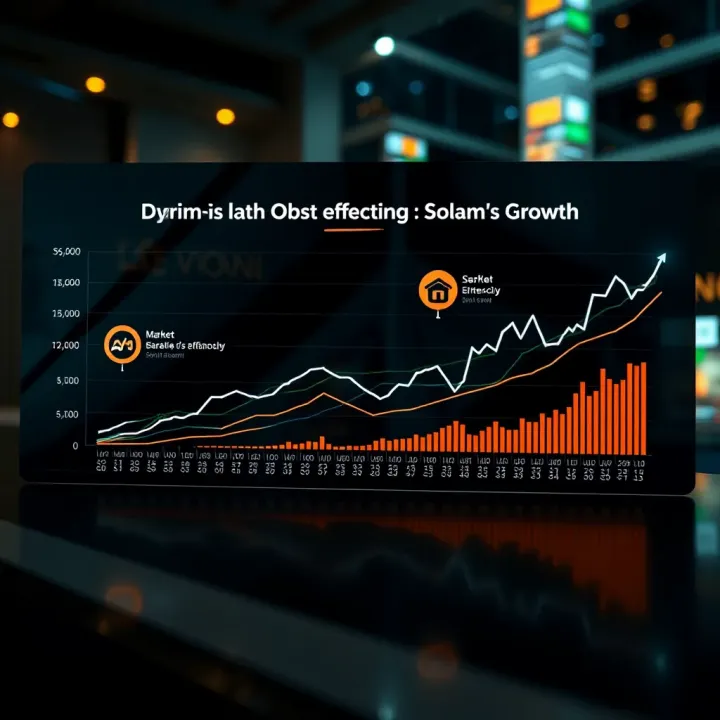
Solana’s ability to process thousands of transactions per second already sets it apart, but ongoing scalability upgrades are critical to handle future demand. Improvements such as parallel transaction processing and optimised consensus algorithms can reduce bottlenecks further. When these upgrades materialise, they not only improve user experience but also instil confidence among large-scale applications considering Solana for their platforms, thereby increasing token utility and value.
Security and reliability developments
Network outages and vulnerabilities can shake investor trust, so enhancing security measures is essential. Solana has taken steps with stronger validation protocols, bug bounty programmes, and decentralisation of network nodes. These efforts reduce risk of failure or attacks, which can stabilise the ecosystem and attract risk-averse institutional players, potentially lifting SOL's market price.
Influence of investor confidence
Prices often reflect how investors perceive a blockchain’s potential, beyond just technical specs. Positive news around adoption, partnerships, or upgrades can create bullish sentiment, drawing more retail and institutional players. For instance, when Solana successfully launched major features or completed collaborations, its price spiked due to increased investor confidence.
Role of institutional investments
Institutional money tends to move markets significantly, given the volume involved. Large funds, hedge funds, or exchange-traded funds (ETFs) including Solana can bring in sustained capital inflows. Reports of investment by known asset managers or incorporation into crypto indices often catch market attention. If Solana continues to secure institutional backing, it could help push the token price closer to ambitious levels like ₹10,000.
Solana’s price momentum depends as much on expanding real-world use cases as on investors’ belief in its long-term viability. Technologies improve, but without adoption and trust, value growth stalls. Understanding these drivers offers investors a clear picture of what might push SOL towards higher price brackets.
In sum, strong DeFi growth, solid partnerships, continuous tech upgrades, and positive market sentiment—especially from institutional players—are the engines that can drive Solana’s token price upward. While challenges remain, these drivers highlight why the ₹10,000 target, though steep, is within discussion for serious market watchers.
Understanding the barriers and risks facing Solana is crucial when gauging whether its price can realistically reach $10,000. These challenges directly influence investor confidence, adoption rates, and the network's operational stability. Ignoring such factors could lead to an overly optimistic forecast that doesn't reflect the true market scenario.
Solana operates in a fiercely competitive space alongside Ethereum and Binance Smart Chain, among others. Ethereum dominates with its vast developer community, numerous decentralised applications (dApps), and proven security despite slower transaction speeds and higher gas fees. Binance Smart Chain (BSC), on the other hand, offers faster and cheaper transactions, appealing to both developers and users seeking cost-effective solutions.
Emerging platforms like Avalanche and Polkadot also vie for market share by offering unique interoperability and scalability features. This crowded environment means Solana must continuously innovate to maintain and grow its user base. The presence of these alternatives limits Solana's ability to command a premium valuation without distinct advantages.
Comparative advantages for Solana include high throughput with low transaction costs and fast finality, making it attractive for DeFi and NFT projects. However, its weaknesses, such as occasional network outages and a less mature ecosystem compared to Ethereum, can deter developers and investors. Ethereum's extensive tooling and BSC's large user base present tough competition, affecting Solana's growth prospects and price potential.
Solana has had notable technical glitches causing network slowdowns or outages. For example, in September 2021, Solana faced a 17-hour outage due to network overload, which disrupted transactions and shook community confidence. Such incidents highlight vulnerabilities in its consensus mechanism and infrastructure.
These glitches impact market perception, as traders and institutional investors may view Solana as less reliable than competitors. Consistent performance is critical — outages can lead to temporary price dips and reduced adoption.
To counter this, Solana Labs and the community have implemented measures like validator improvements, software upgrades, and better stress-testing protocols. These steps aim to enhance network stability and resilience against future strain. Though progress is being made, sustaining uptime is essential for long-term price growth and attracting institutional interest.
Global regulations profoundly affect cryptocurrencies like Solana. Governments tightening rules around anti-money laundering, securities classification, and taxation create uncertainty. For instance, India's evolving stance on cryptocurrency trading impacts domestic investor behaviour, which in turn affects liquidity and price movements.
Regulatory announcements can trigger swift market reactions, often leading to sudden price volatility. Solana’s reliance on decentralised finance (DeFi) also exposes it to scrutiny, as regulators assess risks around consumer protection and financial stability.
Besides regulations, the crypto market naturally experiences high volatility. Prices can swing dramatically within short periods due to market sentiment, speculation, or macroeconomic events. This volatility means investors must be prepared for sharp price corrections, making the journey toward $10,000 uncertain and prone to fluctuations.
Investors should weigh these risks carefully. High potential rewards come with barriers that could delay or prevent Solana’s price from reaching lofty targets.
Overall, competition, technical reliability, and regulatory factors form the key hurdles Solana must overcome to sustain sustained price growth. Understanding these challenges helps investors make informed decisions about their exposure to this ambitious cryptocurrency.
Reaching a $10,000 price per token represents a massive leap for Solana, and understanding what it would take is essential for investors and analysts. The goal hinges largely on the project's ability to expand its market capitalisation, grow its user base, and increase transaction volume to sustain such a valuation. This section breaks down the practical aspects and timeframes to put this ambition into perspective.
To achieve a $10,000 price per SOL token, Solana's market capitalisation must soar well beyond its current levels. Considering there are roughly 350 million SOL tokens in circulation, the total market cap would need to approach the $3.5 trillion mark. For comparison, as of early 2024, only Bitcoin and Ethereum come close to or exceed a market cap above $400 billion. This means Solana would have to rival, or even surpass, the combined valuations of the largest cryptocurrencies and perhaps even many traditional corporations.
This is no small feat. It requires substantial user adoption and ecosystem growth. The network's ability to process a higher volume of transactions and host increasingly valuable decentralised applications (dApps) will be critical. Just as Ethereum’s rise was powered by a booming DeFi and NFT sector, Solana would need similar or greater traction to justify such a market cap.
A significant expansion in Solana’s active users and transaction volume will underpin its price surge. Currently, Solana processes tens of millions of transactions monthly, but to justify a $10,000 price, this needs to scale manifold. An increase in real-world use cases, from payment platforms to gaming and DeFi, can drive more consistent network activity.
More users usually translate into demand for SOL tokens, whether for transaction fees, staking, or governance. For instance, if new projects similar to Serum or Star Atlas gain traction, attracting millions of new users, the demand could push prices up. Furthermore, scaling solutions and upgrades that improve transaction speed and decrease costs will also boost adoption, creating a positive feedback loop for price growth.
A jump to $10,000 per SOL is unlikely in the short run, given the scale of growth required. Short-term price moves tend to be volatile and influenced by broader market trends rather than fundamental changes. While speculative rallies can temporarily push prices upward, sustainable growth will need years of steady ecosystem expansion and user adoption.
Long-term, say over five to ten years, there's more room for realistic growth if Solana continuously improves its technology, secures partnerships, and navigates regulatory hurdles successfully. It is in this timeframe investors might see the network mature enough to approach such ambitious targets.
Several factors can affect how fast Solana climbs. Accelerators include network upgrades enhancing scalability and security, big-name dApps launching on Solana, or institutional investment flooding in as confidence rises. For example, if Solana gains prominence as the preferred blockchain for metaverse projects, demand could surge rapidly.
Conversely, delays can arise from ongoing technical issues like network outages, increased competition from emerging blockchains improving on Solana’s weaknesses, or unfavourable regulatory developments. Negative sentiment across the crypto market can also slow down growth, regardless of the project's fundamentals.
Investors should weigh these variables carefully — while the potential is there, it requires a mix of technology, adoption, and market conditions aligning over several years.
In summary, reaching $10,000 per SOL is a tall order requiring transformative growth in market cap, user activity, and transaction throughput, supported by favourable timelines and external conditions. Anyone looking at this target should keep realistic expectations and monitor key developments closely.
Investors eyeing Solana (SOL) should carefully weigh the risks and rewards before deciding their exposure. Understanding market cycles and staying updated on developments can make a sizeable difference in handling this volatile asset. This section summarises key investor considerations, helping you navigate Solana’s price potential with a balanced approach.
Balancing portfolio exposure to Solana is essential to limit risks without missing growth opportunities. Since Solana is a high-volatility crypto asset, allocating just a small fraction—say 5-10% of your total portfolio—towards SOL can help contain potential losses if the market dips unexpectedly. For example, investors heavily concentrated in one crypto saw significant setbacks during the 2022 downturn, while those who diversified had cushions to avoid heavy losses.
Investors must avoid betting all on Solana alone. Including a mix of other cryptocurrencies such as Bitcoin, Ethereum, or even non-crypto assets like equities and bonds stabilises overall portfolio performance. Diversification prevents any single event, like a network outage or regulatory change impacting Solana, from devastating your investment.
Understanding volatility and market cycles is equally critical. The cryptocurrency market moves in waves—with bullish rallies followed by pullbacks. For Solana, price swings can be sudden and steep given its lower market cap compared with Bitcoin or Ethereum. Being mentally prepared for such volatility helps avoid panic selling at lows or euphoric buying at peaks.
Keeping track of past market cycles provides perspective. For instance, SOL’s price surged in 2021 amid broader crypto enthusiasm but faced sharp corrections later. Recognising these patterns allows investors to plan entry and exit strategies better and not chase short-term hype.
Following protocol updates and news about Solana is vital for any investor. Solana’s technology is evolving rapidly—updates that improve scalability or security can boost confidence and price. Conversely, any network outages or security flaws reported might signal caution.
For example, when Solana announced its plans for increasing throughput capacity or rolling out new DeFi protocols, market sentiment often turned positive. Investors who kept an eye on these developments could act timely, either increasing positions or taking profits. Regularly checking Solana’s official blog, developer forums, and trusted crypto news outlets can keep you ahead.
Monitoring market trends and regulatory changes also shapes price prospects. The crypto market in India and globally faces evolving regulations, with authorities tightening norms around KYC, taxation, and exchange operations. Such moves can affect liquidity and investor enthusiasm.
Rather than reacting impulsively to every regulatory announcement, try to understand the implications. For instance, if RBI or SEBI issues guidelines favouring crypto investments under clear regulatory frameworks, that could be a positive signal. On the other hand, bans or restrictions in major markets might cause short-term jitters.
Staying informed helps you make decisions based on facts and trends, not rumours or fear. Solid knowledge empowers you to ride volatile markets with greater confidence.
Explore QXBroker's features, account types & services designed for Indian traders 🇮🇳. Learn about platforms, deposits, support, and security here! 💹🔒
Explore Reliance's share price outlook for 2030 📈, covering growth drivers, market hurdles, and economic trends for savvy investors in India 🇮🇳.
📈 Explore Ripple XRP's latest price trends, expert insights, and key market moves to watch. Stay informed on regulation impacts and future outlooks.
📈 Explore what could shape Reliance Industries' share price by 2050. Dive into market trends, tech, regulations & economic factors affecting long-term growth.
Based on 6 reviews